24 August 2017

Birkas Habayit - ברכת הבית - Blessing of the home

The Birkat Habayit is perhaps the most popular blessing in the Jewish world, appearing as a hanging amulet inside the entrance of many houses of Jews of all streams.
The theurgical power of scriptural verse is one very significant element that distinguishes Jewish prayer from other literary prayer praxes. At least three verses seems apropos to me. The first two : Exodus 25:8 associates ones own house with the archetypal mishkan, the dwelling place intended for the shekhina (Divine Presence). The second verse, from Proverbs 24:3-4, is prescriptive. If you ask for an accompanying verse from the Tanach to the popular Blessing for the Home you can think of  the verse of blessing given by Bilaam the prophet in Numbers 24:5 upon seeing with his own eyes the wandering camp of the Israelites. These three verses, I think, help to ground the intention of the blessing in the context of the Jewish imagination.
The provenance and original authorship of the formula is unknown.
Birkat habayit:
Bezeh haššshaˁar lo yavo tzaˁar.
Bezot haddirah lo tavo tzarah.
Bezot haddelet lo tavo bahalah.
Bezot hammaḥlaqah lo tavo maḥloqet.
Bezeh hammaqom tehi b'rakhah v'shšalom.


Blessing for the home:
Let no sadness come through this gate.
Let no trouble come to this dwelling.
Let no fear come through this door.
Let no conflict be in this place.
Let this home be filled with the blessing of joy and peace. 


The Days Between: Blessings, Poems, and Directions of the Heart for the Jewish High Holiday Season

Tefilat Shemoneh Esrei V'yosodot Ha-emunah: The Eighteen Blessings and Jewish Faith

Jewish Star of David - Blessing for Home Good Luck Wall Decor.

Wooden Star of David - Chodesh Tov Elul

Beginning of new Hebrew month of Elul. Elul is the 6th month of the Hebrew year. Corresponds to August or September on the Gregorian calendar.
Rosh Chodesh Elul begins at sundown on Mon, 21 August 2017.
Elul is the 12th and final month in the Jewish calendar. It is a month that connects the past year with the coming year, a time when we reflect on where we stand and where we should be going.
It is called “the month of repentance” and “the month of forgiveness.” 

On Rosh Chodesh Elul, Moshè ascended to Mount Sinai for a third 40-day period until Yom Kippur, when he descended with the second tablets (luchot) and G‑d’s word of joyful, wholehearted forgiveness. These were days when G‑d revealed to the Jewish people great mercy. Since then, this time has been designated as a time of mercy and forgiveness, an opportune time for teshuvah, repentance.
The four letters of the name Elul are an acronym for the phrase in “Song of Songs” (6:3): “I am to my beloved and my beloved is to me.” “I am to my beloved”we approach G‑d with a desire to return and connect. “And my beloved is to me”G‑d reciprocates with Divine expressions of mercy and forgiveness.
This is the month when “the King is in the field.”

This star puzzle styled is made from Alps pine wood. Pine wood is very soft and easily handcrafted. Handmade working with inspiration.
Make a template by cutting two 5-by-5-by-5-cms triangles out of paper,any paper will do. Turn one triangle upside down, tape it on top of the other one to create a six-pointed star, and outline the star on poster board. Or simply download and print out the template here. You can also have a copy to enlarge or shrink it to three different sizes so that you can see which one looks best on you. Use your final choice to make a wood star by cutting 12 triangles and then glueing them together.


WOOD AND WOOL STAR OF DAVID


These are custom, hand cut, 6 point stars made of white pine with carded wood added in the centre, in sets of 4 different colours. Each star may vary slightly in size or woool colours. They are  sanded to clean up the edges and finished with water wood paint.
Your Jewish guide - Elul Tishrei: A Comprehensive, Contemporary Guide to Jewish Life. Everything you ever wanted to know about The Month of Elul and the Holidays of Tishrei.

Working Wood 1 & 2: the Artisan Course with Paul Sellers
Please contact me if you want to place an order for the stars.


27 May 2017

Shavuot decorations - Jars

Passover and Shavuot, most commonly known as the festivals that commemorate, respectively, the Exodus and the Giving of the Torah, each also have a pronounced agricultural element.
The Torah instructs that on the second day of Passover we should bring the first cutting of our barley harvest to the Holy Temple in Jerusalem as an offering to G‑d, and not to partake of that year's barley crop until that offering is made. On Shavout, we are commanded to bring the first of our wheat harvest as an offering to G‑d, and not partake of that year's wheat until this is done. Hence, the 49-day count leading from Passover to Shavuot is called "The Counting of the Omer"--a reference to the omer (a biblical measure) of barley that was brought on the first day of the count--and Shavuot is called Yom Habikkurim, "The Day of the First-Fruits Offering."
In Biblical tradition, barley is primarily animal food. Wheat is the key and ideal human food.

Who is ready for decoration Shavuot? We are !!!! 
It is time to sort out some of your old glassware for this Shavuot project. 
We love refurbishing items into something fresh and new… do you have an old jar, beverage glass or even glass candle holder laying around? These three miscellaneous items can be turned into Shavuot vases with just yarn and glue.
Supplies needed:
Glass containers (We used an old  glass, a old candle holder )
Cotton yarn
Mod Podge
Scissors
Directions:
1. Starting at the bottom rim (or top… it doesn’t matter), glue the beginning yarn strand in place. Glue around the edge and line it with the yarn, then tuck the lose strand underneath. I glued the first three rows in place for more stability. Continue to wrap yarn around the glass. If glass curves, you will need to glue yarn in place to prevent it from sliding.
2. Once you have the desired thickness, cut the yarn and glue in place. Glue next yarn color on and keep winding around the jar.
3. Continue to add different colors until you reach the top. Just to reiterate, as the glass curves, additional glue will be needed. Along the top rim, glue the yarn until there is no more glass, cut off yarn and glue in place.

As part of this Shavuot decoration we're going to  make some DIY Color Wrapped Wheat.
It’s a simple and easy project, but it’s a beautiful way to add interest and a splash of color to your Shavuot table. And don’t worry, even if you’re not hosting the holiday feast, you can still whip up a few of these to decorate your space.
For this project, you will need dried wheat stalks, embroidery floss (in any color you’d like), and a pair of scissors. Yep, that’s it.
Bunch the wheat together near the top, wrap around once with the embroidery floss, and tie a knot to hold everything in place.
Then, start to wrap the embroidery floss around the stalks. I found it easiest to spin the wheat to wrap the floss rather than spinning my hand around the wheat.
If you’re putting them in a vase like we did here, you can trim the bottom of the stems so they are all the same length.


Shop this POST
Plaid Mod Podge Opaco 8oz / 236ml
CurtzyTM 42 cotton yarn - 43.3m
Fiskars scissors


25 May 2017

Book of Ruth - Needle felted case

The Book of Ruth is found in the third main division of the Tanach, Ketuvim (Writings). The book has been preserved on parchment and thus came to be known by its Hebrew name of Megillat Ruth, the Scroll of Ruth.
This scroll concerns itself with the Ikvot Meshicha (Ikveta diMeshicha - Aramaic), the approaching footsteps of Mashiach. It concerns itself with the time immediately preceeding the coming of the Mashiach. This is related in the parasha of the “heel”: Eikev
This scroll centers around Ruth, a Moabite widowed princess who spends most of her life alone, without a husband, family, and kinsmen. Her life is filled with hardship as she gleans grain in order to have enough to eat. She has no other way to live. Why does she choose to leave her father’s palace in Moab to become a pauper in a foreign land? We will explore the answer to this question later in our study.
Why read Ruth on Shavuot?
There are seven reasons why we read the Megillah of Ruth on Shavuot:
1. The events occurred during the harvest season. Shavuot is the Harvest Festival.
2. Ruth was a convert to Judaism. Conversion is an individual "Kabbalat HaTorah".
3. Ruth the Moabite was permitted to marry Boaz, based on a drasha of the verse, "A Moabite may not marry into the Congregation of HaShem" (Devarim 23:4). This hints at the unity between the Written Torah and the Oral Torah.
4. King David was born on Shavuot. The Megillah of Ruth concludes with David's lineage.
5. To teach the greatness of Gemillut Chassadim, acts of loving-kindness.
6. To teach that the Torah is acquired only through affliction and poverty.
7, The name "Ruth" has the numerical value of 606. At Har Sinai the Jewish People accepted 606 mitzvot, in addition to the 7 Noachide Laws. 


NEEDLE FELTED CASE FOR AN ILLUSTARTED MEGHILLAT


24 May 2017

Yom Yerushalayim, Jerusalem Day

Yom Yerushalayim - Jerusalem Day , is the most recent addition to the Hebrew calendar. It is celebrated on the 28th day of Iyar (six weeks after the Passover seder, one week before the eve of Shavuot). In 2017, Yom Yerushalayim falls on May 24. Although Jerusalem has been considered the capital city of the Jewish people since the time of King David, who conquered it and built it as the seat of his monarchy in approximately 1000 B.C.E., there has never been a special day in honor of the city until the Israeli army took over the ancient, eastern part of the city on the third day of the Six-Day War in June 1967.

 Drawing to color, print  and pasta : Zenspirations by Joanne Fink

A common citation in Yom Yerushalayim celebrations in Israel is the quote (Psalm 122:4) Ir shehubrah lah yahdaiv , “a city that is compact together” or “a city uniting all.” (This translation is probably influenced by a rabbinic midrash on this verse which interpreted the phrase to reflect events in rabbinic times. In using the citation today, a modern midrash has been built on the rabbinic interpretation.)
The course which Yom Yerushalayim will take in future decades will be influenced, undoubtedly by the political developments that determine the status of the city in future times.


http://amzn.to/2qSwOjs
Quest'anno a Gerusalemme Copertina flessibile – 20 nov 2002

di Mordecai Richler (Autore), M. Birattari (Traduttore)

http://amzn.to/2refJl7
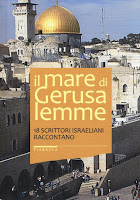
 Il mare di Gerusalemme. 18 scrittori israeliani raccontano Copertina flessibile – 19 gen 2017

http://amzn.to/2qSy1HC

22 May 2017

Felt flowers for Shavuot 2


Handmade layered felt flower button wool pink, silver grey, white
Set of handmade felt & button embellishments flower for Shavuot decoration, made with quality felt in pink, silver grey and  white and centered with an hand stitched button. 
Each set contains x3 gorgeous felt flowers. These are perfect for brooches, clippies, embellishments, hair pieces, bunting, card making ,Shavuot uses are really endless... Buttons may vary and their measure is approx. 1.5" each.

Need some buttons? Find them:
http://amzn.to/2qIxN5B

21 May 2017

Felt flowers for Shavuot 1

In honor of the giving of the Torah, G-d miraculously adorned Mt. Sinai, which was situated in middle of the Sinai Desert, with greenery and vegetation. For this reason, G-d had to tell Moses, "No one shall ascend with you, neither shall anyone be seen anywhere on the mountain, neither shall the sheep and the cattle graze facing that mountain" (Exodus 34:3).
After all, what would the ladies say if the Torah was given on a barren mountain, without blooming blossoms in the background...?
To commemorate this special miracle, we decorate our synagogues and homes with flowers and plants on the holiday of Shavuot.


Felt Flowers are Easy and Very Enjoyable to Make
Felt flowers are usually made by one of four basic techniques, some use a combination of them.The effect of creating a particular flower (rose, mums, peony, daisy, etc) is achieved by shaping or cutting the top of the felt petals in different ways.
Flat technique: This technique involves cutting felt flower shapes in several sizes and then stacking them in order largest on the bottom, smallest on the top. They are sewn or glued together usually through the center.
Types of Felt
What are the Different Types of Felt?
There are four basic types of felt for this type of project - wool, wool blend, acrylic and "eco" felt.
Wool felt is 100% wool. It's the most luxurious and rich to the touch and in appearance of the felts. It is possible to make your own wool felt material for these projects. You can upcycle wool garments or felt a knitted or crocheted piece.
Wool Blend Felt
Wool is also the most expensive felt to use, and an alternative is a wool blend. For these flower craft projects, we are talking about felt that is available in squares or by the yard. A wool blend is usually less expensive and still quite luxurious.
Acrylic and Eco Felt
What is Acrylic Felt and Eco-Felt? Acrylic and eco-felts are made from plastic. The difference between the two being that eco felt is made from recycled plastic (bottles, for example). As a felt material for flowers, though, they are less expensive

A Simlpe Way to Make Your Own Felt
This is a guide to an easy way of felting knitted, crocheted or upcycled wool garments. This type of felt will work for making flowers, although it is thicker than store-bought felt, but worth experimenting with. I always thought it could be a nice way to re-use favourite children`s sweaters or blankets (so hard to say goodbye to!).


http://amzn.to/2pZTVt6http://amzn.to/2rH3OIH
http://amzn.to/2qallYI

15 May 2017

Home decor for Shavuot


The Israelites found Mount Sinai blooming and lush with greenery and flowers. As a result, many people decorate their homes with garlands and baskets of flowers for Shavuot. Orany flower like kind of decoration. Try your hand at making some Shavuot decorations, as well.

COLORFULL WALL HANGER

 For this colorful wall hanger I used spring/summer colors combined them with a matching shade of natural coton thread to rimind the colors of the blossoming Sinay at home, on the walls, at the windows (keep in mind you can use them to decorate your Sukkah too).
It will look lovely hanging on a door, a wall or (the side of) a cupboard. The wall hanger is hand cut and embroidered on one side. Each of the circular ornaments consists of four layers of soft wool felt and is delicately decorated with several matching colors of embroidery thread . The wall hanger has 7 ornaments. The length of the thread is about 100cm . You can also make a garland or a wreath in these warm colors if you like. 


Books & Co.
http://amzn.to/2ql3UbE

http://amzn.to/2pDER4l

11 May 2017

Lag b'Omer, homemade simbolic crafts.

Lag B’Omer is a minor holiday that occurs on the 33rd day of the Omer, the 49-day period between Passover and Shavuot. A break from the semi-mourning of the Omer, key aspects of Lag B’Omer include holding Jewish weddings (it’s the one day during the Omer when Jewish law permits them), lighting bonfires and getting haircuts.


Rabbi Akiva and the Bar Kochba Rebellion
The Talmudic explanation makes most sense when put into historical context. The outstanding sage Rabbi Akiva became an ardent supporter of Simeon bar Koseva, known as Bar Kochba, who in 132 C.E. led a ferocious but unsuccessful revolt against Roman rule in Judea. Akiva not only pinned his hopes on a political victory over Rome but believed Bar Kochba to be the long-awaited Messiah. Many of his students joined him in backing the revolt and were killed along with thousands of Judeans when it failed. The Talmudic rabbis, still suffering under Roman rule and cautious about referring openly to past rebellions, may have been hinting at those deaths when they spoke of a plague among Akiva’s students. Possibly, also, Lag B’Omer marked a respite from battle, or a momentary victory.
A completely different reason for the holiday concerns one of Rabbi Akiva’s few disciples who survived the Bar Kochba revolt, Rabbi Simeon bar Yohai. He is said to have died on Lag Ba’Omer.


Lag B’Omer Customs
Unrelated to Rabbi Simeon, the kabbalists also give a mystical interpretation to the Omer period as a time of spiritual cleansing and preparation for receiving the Torah on Shavuot. The days and weeks of counting, they say, represent various combinations of the sefirot, the divine emanations, whose contemplation ultimately leads to purity of mind and soul. The somberness of this period reflects the seriousness of its spiritual pursuits.
Finally, on yet another tack, some authorities attribute the joy of Lag Ba’Omer to the belief that the manna that fed the Israelites in the desert first appeared on the 18th of Iyar.
Though its origins are uncertain, Lag Ba’Omer has become a minor holiday. (For Jews, the holiday is the day after Lag B’Omer.) Schoolchildren picnic and play outdoors with bows and arrows,a possible reminder of the war battles of Akiva’s students , and in Israel plant trees. It is customary to light bonfires, to symbolize the light Simeon bar Yohai brought into the world. And every year numerous couples wed at this happy time.


04 May 2017

Felt Omer counter

According to the Torah, we are obligated to count the days from Passover to Shavuot. This period is known as the Counting of the Omer. An omer is a unit of measure. On the second day of Passover, in the days of the Temple, an omer of barley was cut down and brought to the Temple as an offering. This grain offering was referred to as the Omer. Every night, from the second night of Passover to the night before Shavuot, we recite a blessing and state the count of the omer in both weeks and days. 
So on the 23th day, you would say "Today is 23 days, which is two weeks and two days of the Omer.

02 May 2017

Felt panel for Yom Haatzmaut

David Ben-Gurion, who was the first prime minister of Israel, publicly read the Declaration of Independence of Israel on May 14, 1948. According to the Jewish calendar, this was the fifth day of Iyar, the eighth month of the civil year, in the year 5708. The anniversary of this date on the Jewish calendar is known as Yom Ha'atzmaut and usually falls in April or May of the Gregorian Calendar. 

Handmade felt panel ,six pointed stars theme.
A felt panel tu use as decoration for your party table on Yom Haatzmaut, to hang on your wall close to your flag or just to add a touch of jewishness in your home.

HATIKVAH - the national anthem of Israel

Related Posts Plugin for WordPress, Blogger...